On display: After the Atlas
by Jina Park and Kurt Gebauer
9.4.2026 - 25.5.2026
Curator: Michal Stolárik
The exhibition After the Atlas at Karpuchina Gallery brings together two distinct artistic personalities from different generations and cultural contexts - the Czech sculptor, painter, and educator Kurt Gebauer (b. 1941, Hradec nad Moravicí) and the South Korean painter Jina Park (b. 1980, Seoul), who lives and works in Berlin.
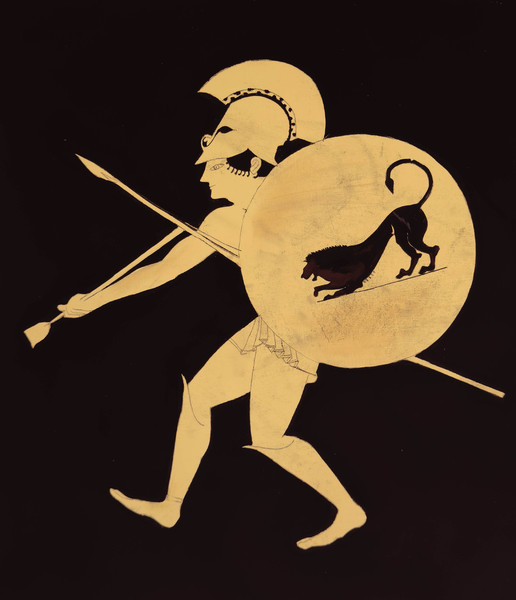
Despite their differing artistic programs, worldviews, and perspectives on the function of art, both enter into a free-associative dialogue. This conversation grapples with an interest in figuration, mythology, symbolism, and surreal moments, as well as an exploration of the ways in which the world around us is formed, interpreted, and transformed. Selected motifs offer common intersections where physicality intertwines with metaphor, and the external world merges with internal experience.
The title of the exhibition suggests a situation following the collapse of a fixed order - a moment when the symbol of a firmly organized world disintegrates, the mountain loses its strength, and the mythological Atlas ceases to bear the weight of the heavens. The burden of representation is released. The structures that once determined how we understand and depict the world are set in motion.
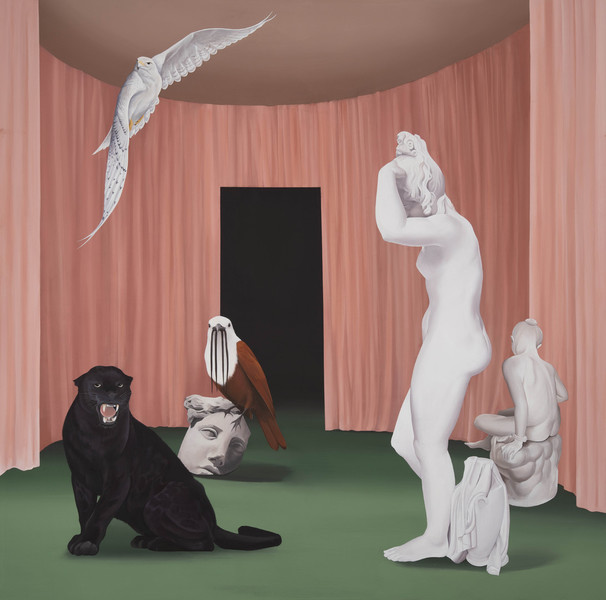
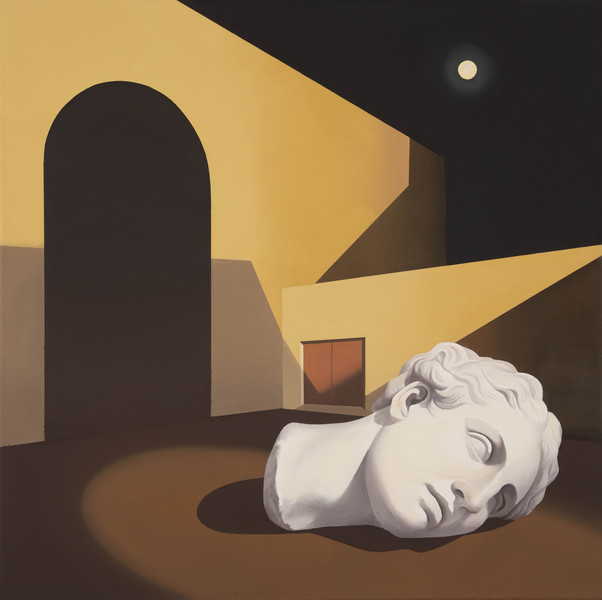
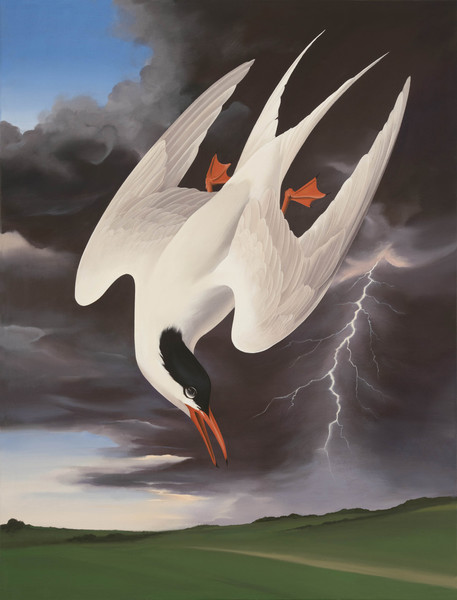
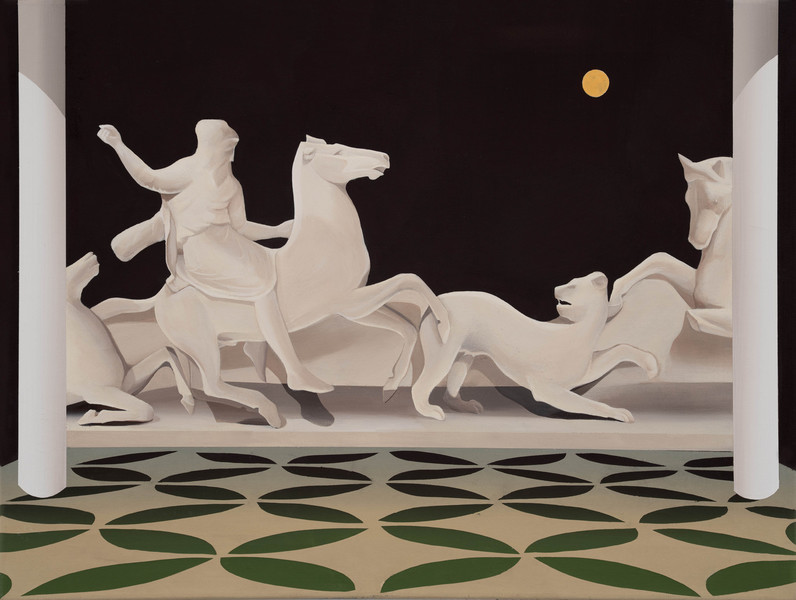
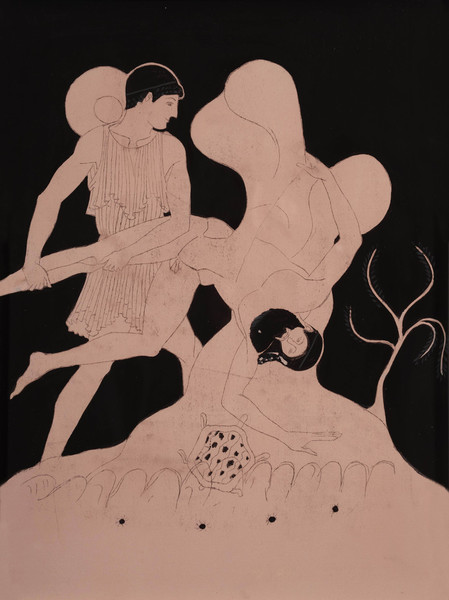
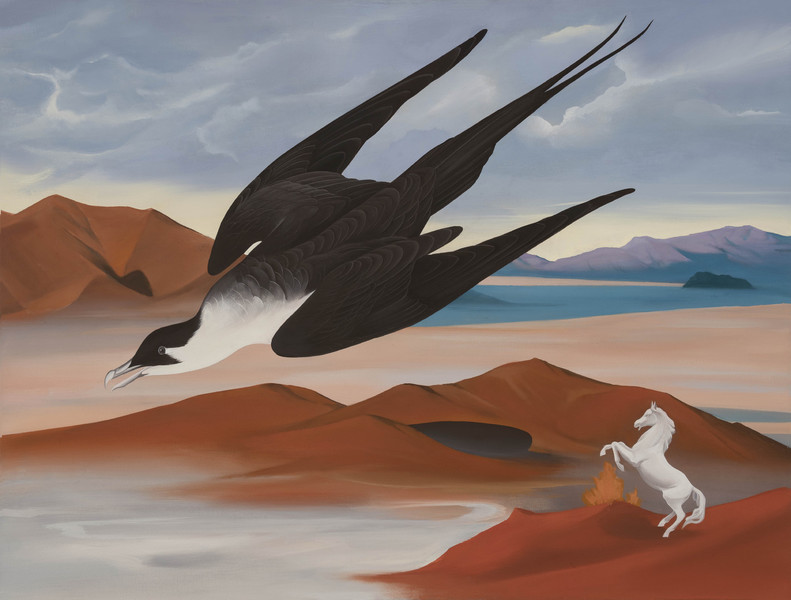
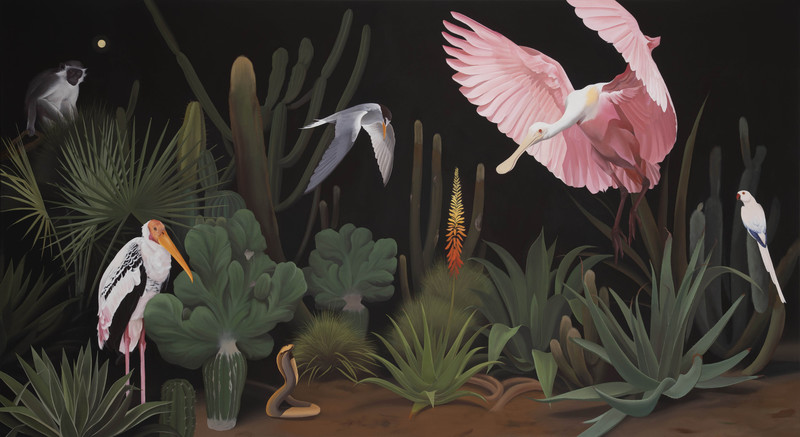
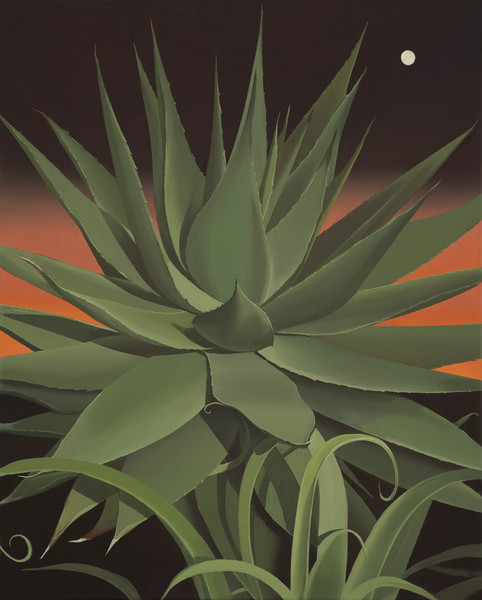
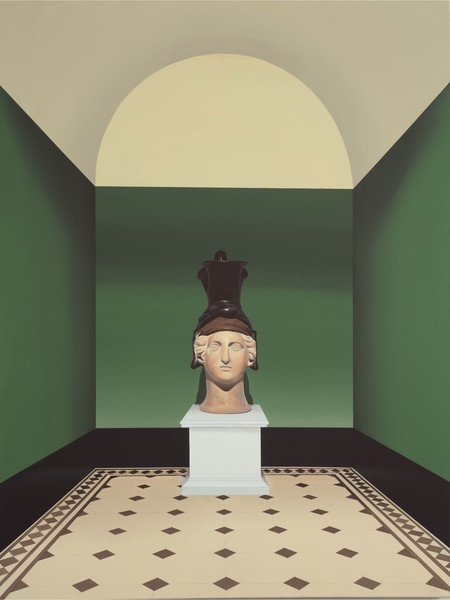
Jina Park’s latest works seamlessly follow her ongoing painting series Collector’s Room (since 2018), in which she explores how cultural power deforms individual identity, transforming people into objects of classification, observation, and ownership. In her figurative compositions, created using the traditional Korean technique of egg tempera, she freely connects natural elements with appropriated motifs from global art history. The situations depicted within suggested architectural spaces evoke still lifes or surreal scenes influenced by the strategies of historical exhibitions, scientific illustrations, and visual archetypes found in sculptural works, exotic plants, or the animal kingdom.
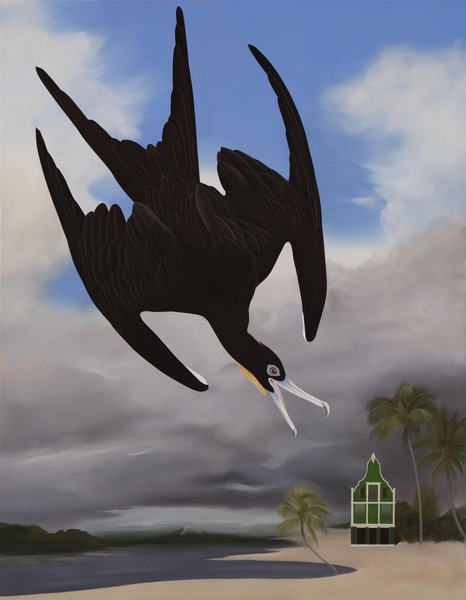
Her current inspiration is the figure of the French-American ornithologist John James Audubon, who, in his quest to create perfect reproductions, killed hundreds of birds and arranged them into seemingly lifelike, dynamic compositions. He subsequently painted them for scientific publications for which he was widely admired; however, from today’s perspective, these works are viewed with ambivalence, as his method reveals the dark side of scientific representation.
The artist interprets this motif as the way we transform nature into an object of observation, while simultaneously identifying the historical violence hidden within the very act of depiction. In selected recent works, she symbolically liberates the bird - it is no longer a passive exhibit but becomes an active agent of resistance. Although it appears to be falling, in her portrayal, it strives to break through the imaginary (academic) frame that confines it.
Kurt Gebauer, throughout his extensive practice spanning decades, has continuously developed an interest in the figure in various shapes and forms - ranging from traditional sculptural works and experimental installations to non-traditional materials, soft sculptures, fiberglass casts, public art, and extensive series of paintings and drawings. His works oscillate between playfulness and imagination, yet they are underpinned by a palpable social irony.
Gebauer’s figures are often captured in dynamic motion, stemming from his observation of the world - particularly his frequent visits to swimming pools and lakes. For him, the motif of swimming naturally blends with themes of floating or flying - as seen in the work Floating (2013), which was originally installed in a public space above the intersection of Dlouhá and Rybná streets in Prague. A different approach is presented by a floor-based installation made of stones found in a marlstone quarry. In this reconstruction of a figure from the original land-art project The Beach I. (1984), he abandons the traditional understanding of sculpture and, with respect for nature, assembles a resting female figure. Finally, Gebauer’s model for the exterior realization Birds (Opava, 2006) enters the gallery space as an oversized, simplified form, closing the exhibition in an atmosphere that is absurdly charming yet slightly unsettling.
One of the key motifs of the exhibition is the breaking of norms - whether through the critique of firmly defined procedures and systems of representation or through subtle, dreamlike moments that allow us to veer away from stability. Figures, birds, and the paintings themselves find themselves in a transitional state between falling and flight, between solidity and decay. They are learning to exist differently, yet still in contact with the world that forms them.
- Michal Stolárik
 Druckversion